Channel Letters for Long Island Businesses
Dollar Sign designs, fabricates, and installs channel letters for Long Island storefronts, offices, and shopping centers. One team handles the drawing, the build, and the install, so the sign on your wall matches the proof you approved.
4.9-star Google rating
from 500+ reviews
Design, fabrication, and install
by one in-house team
Custom quote within 24 hours
for Nassau and Suffolk County
 How They Are Built
What Channel Letters Are
Channel letters are individual three-dimensional letters, numbers, and logo shapes mounted to a building. Each one is a shallow metal can with an aluminum back, aluminum sides called returns, and a face. LED modules inside the can light the letter, and the way the face and back are built decides where the light comes out.
Because every letter is its own piece, the sign follows the exact shape of your name and logo instead of sitting inside a box. That is the difference from a cabinet sign, and it is why channel letters are the standard for storefronts that have to read from the road at night. They are one of the exterior signs in our full range of sign services.
- 1
Back
Aluminum on most letters. Halo-lit letters use a clear or open back so light can reach the wall.
- 2
LED modules
Low-voltage LED modules mounted inside the can, wired to a power supply in the raceway or behind the wall.
- 3
Returns
The aluminum sides of each letter, painted to your color. Their depth depends on the lighting style.
- 4
Face
Translucent acrylic on front-lit letters, with vinyl overlays to match brand colors. Halo-lit letters get a solid metal face.
- 5
Trim cap
The edge that holds an acrylic face to the returns. Trimless letters leave it off for a cleaner outline.
 Lighting Styles
Choose How Your Letters Light Up
The lighting style changes how the sign reads in daylight and after dark. Pick a style to see how it is built and where it fits.
Side view: where the light goes
Front-lit channel letters
The face glows. LED modules inside the can shine forward through a translucent acrylic face, and a trim cap holds the face to the aluminum returns. The whole letter lights up, so the name reads from across a parking lot at night.
When to choose it
Storefronts that need to be read from the road after dark, and shopping centers whose sign criteria call for internally lit letters.
Trimless front-lit letters
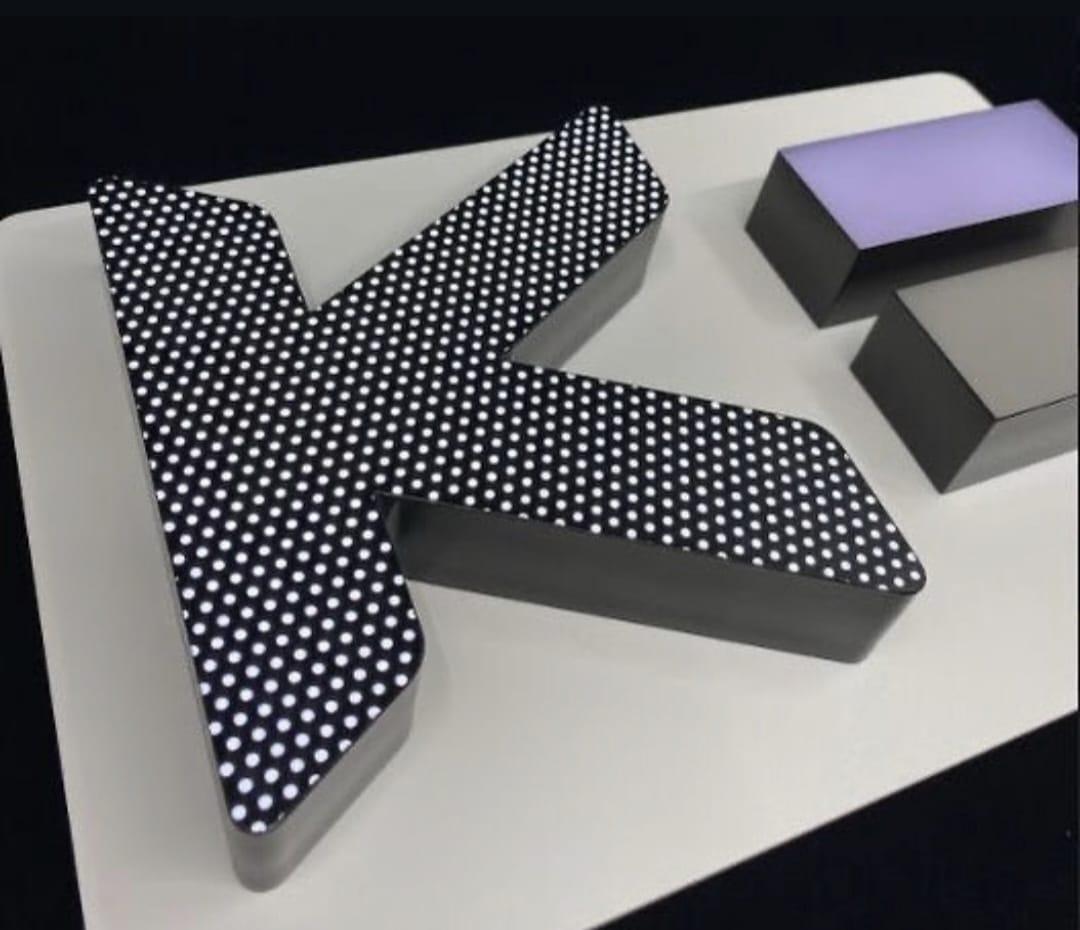
Same forward light, cleaner edge. The face sits inside the return without the plastic trim cap, so the outline of each letter stays crisp up close. Perforated vinyl over the face, like the letter shown here, gives a dark face in daylight that still lets light through at night.
When to choose it
Thin strokes, script, and detailed logos where a trim cap would crowd the shapes, and entrances people see from a few feet away.
Halo-lit channel letters
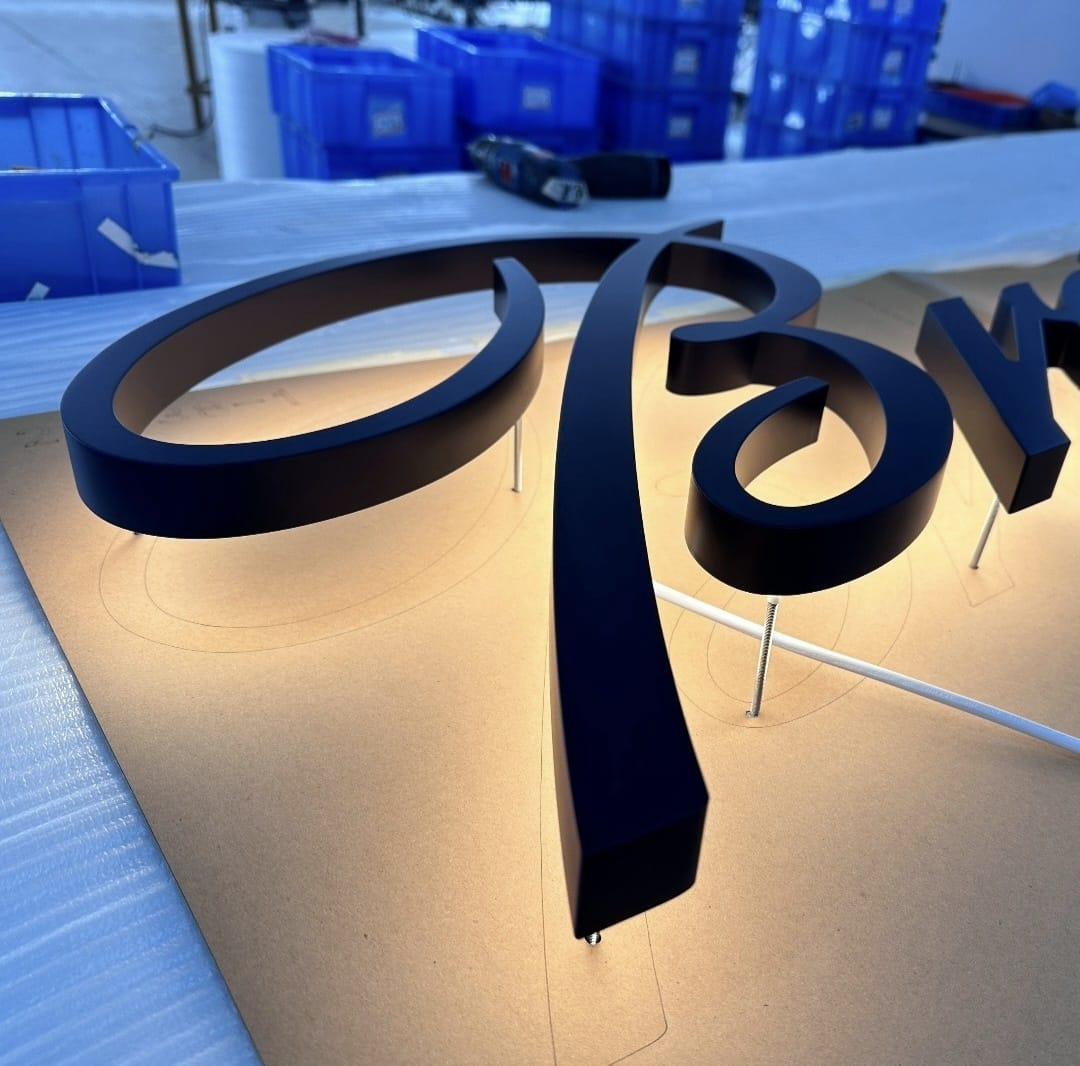
The light goes backward. The face and returns are solid metal, and the LEDs shine out through a clear or open back onto the wall. Each letter is mounted on standoffs a short distance off the facade, which gives the glow room to spread into a ring around the letter.
When to choose it
Offices, salons, restaurants, and upscale retail that want a quieter look at night. A smooth, light-colored wall shows the halo best, so the wall surface is part of the decision.
Side view: where the light goes
Combination front-lit and halo-lit letters
Both at once. A translucent face lights forward while a clear back throws a halo onto the wall behind it. The letter reads from a distance and still has the depth of a halo up close.
When to choose it
Brands that want strong night visibility and a premium finish on the same sign, where the landlord or town allows both types of illumination.
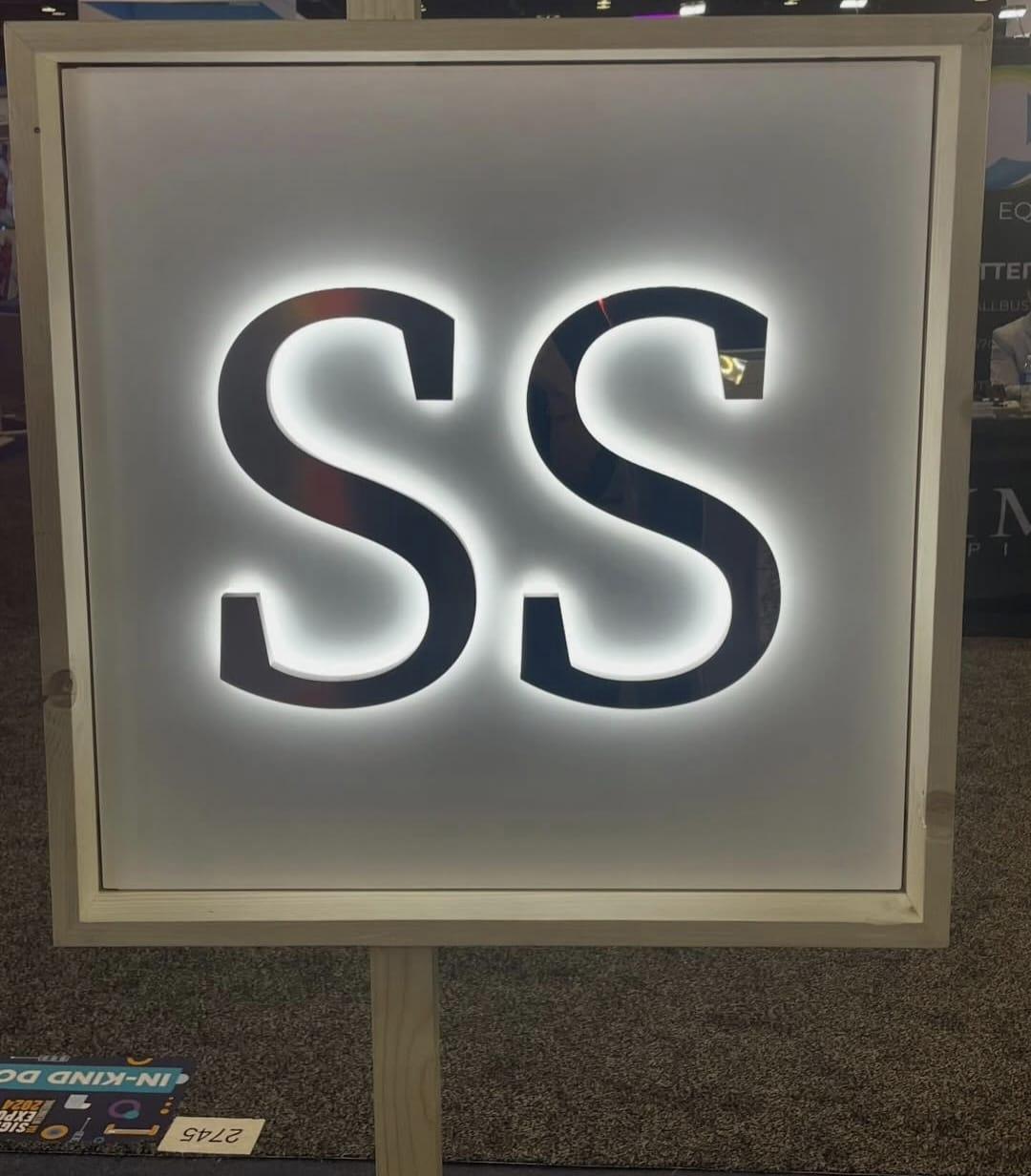
Edge-lit letters
Light shows at the edges. Translucent returns or acrylic edges glow around the outline of each letter while the face stays mostly solid, so the shape is traced in light instead of filled with it.
When to choose it
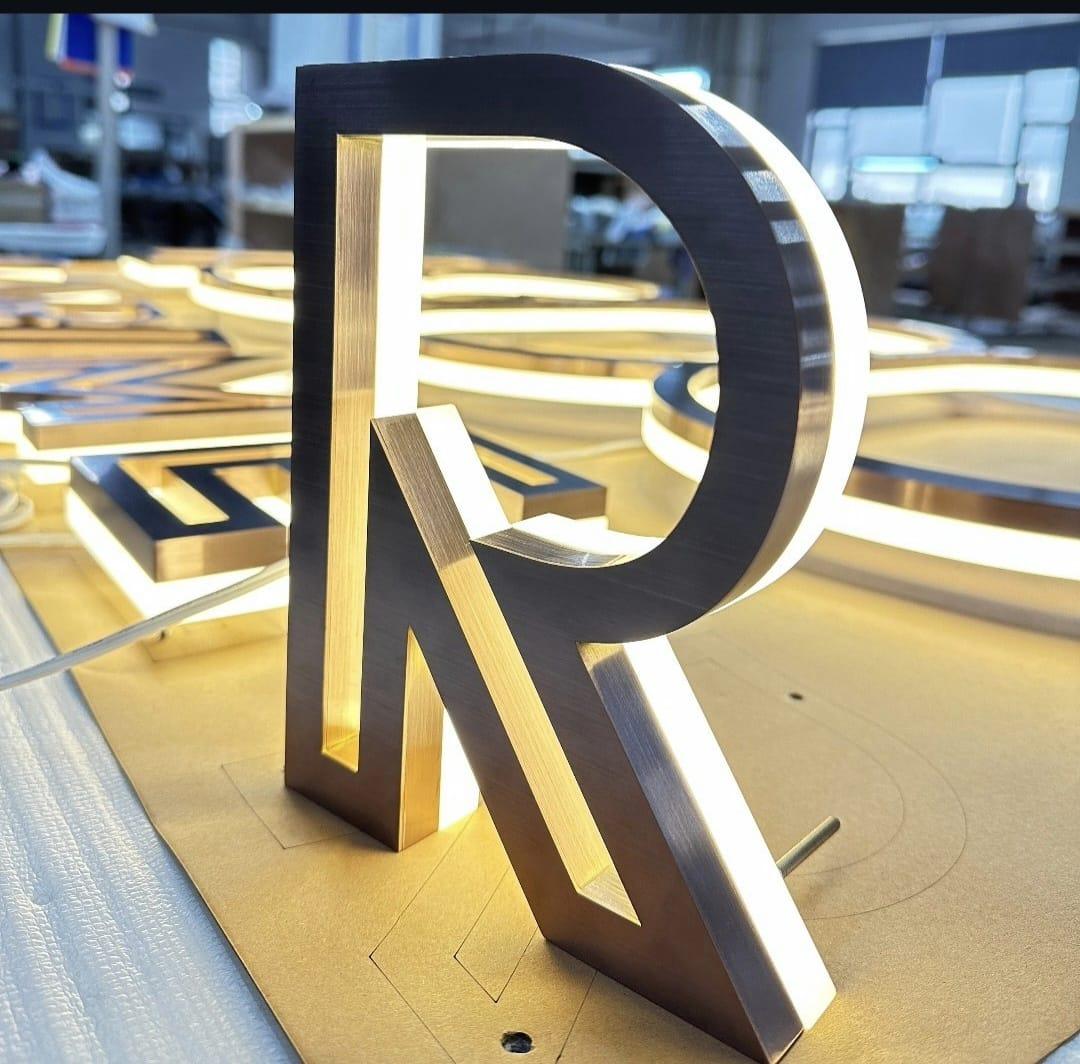
Modern logos, covered entries, and interior feature walls where a thin line of light suits the brand better than a full glowing face. It is often paired with a halo, as in the sign shown here.

Non-illuminated and open-face letters
No internal glow. Solid fabricated letters rely on depth and shadow to read in daylight, and they can be lit from outside with gooseneck or flood lights. Open-face letters leave the front of the can open so the light source inside is visible, which gives a retro marquee look.
When to choose it
Businesses that close before dark, facades that already have exterior lighting, and walls where running power to the sign is not practical.
Mounting
Raceway or Direct Mount
How the letters attach to the building affects the look, the number of holes in the facade, and what your landlord will approve.
Raceway mount
The letters mount to a narrow metal box that runs behind them and holds the power supplies and wiring. Only the raceway fastens to the wall, so the facade takes fewer holes, and the raceway can be painted to match the building. Some shopping center landlords require raceways because they make tenant changeovers simpler.
Direct (flush) mount
Each letter fastens straight to the wall, and the wiring passes through to power supplies behind the facade. Nothing shows between the letters, which gives the cleanest look, but it needs access to the inside of the wall and more penetrations through it. Halo-lit letters usually mount this way, on standoffs.
Sizing letters to read from the road
Letter height starts with distance and speed. A sign facing a busy multi-lane road needs larger, bolder letters than one people see from a plaza sidewalk. Heavy strokes and simple typefaces hold up at night better than thin script, which can blur into a single glow on a front-lit face. Contrast matters as much as size: white faces against dark returns, or a halo against a light wall, read faster than colors close in tone. We check the sight lines during the site survey, then show the letter height on your proof against the maximum your landlord or town allows.

Another Option
Channel Letters or Flat-Cut Letters?
Not every wall needs lit letters. Flat-cut letters are cut from solid acrylic, aluminum, or PVC and pinned to the wall, like the law office sign shown here. They cost less and work well in lobbies and hallways where the room lighting does the job. Our interior signs page covers those options.
Channel letters earn their cost when the sign has to work after dark or read from a parking lot. Many storefronts pair lit letters over the door with window graphics on the glass below, and our storefront signs page covers cabinet and fascia signs if a single lit box suits the space better.
Our Process
How a Channel Letter Project Runs
- 1
Consult and site survey
We look at the wall, measure the sign area, check where power can reach the letters, and note what your landlord and town will ask for.
- 2
Design and proof
You get a proof showing letter sizes, colors, lighting style, and mounting. Nothing is built until you approve it.
- 3
Permit and landlord support
We help prepare the drawings and details for your town permit and your landlord’s sign criteria, and coordinate the submission with you. Approval timing is set by the town and landlord.
- 4
Fabrication
Returns are formed, faces are cut, and LED modules are installed and wired in our Farmingdale shop, built to the approved proof.
- 5
Installation
Our installers mount the letters or raceway, set the spacing and level to the approved layout, and check that every letter lights evenly.
Getting a Quote
What to Send Us
The more we know up front, the more accurate the first number is. You do not need all of this to start, but each item saves a round of questions.
- Your logo as a vector file (AI, EPS, PDF, or SVG) if you have one.
- Two or three photos of the wall, one straight on and one from the street.
- The rough width and height of the sign area.
- Your landlord’s sign criteria if you lease in a shopping center or plaza.
- Whether there is power at the sign location today.
- The look you want after dark, or a sign you have seen and liked.
Install Day
What to Expect on Install Day
Our crew arrives with the letters, the mounting hardware, and the lift or ladders the wall height calls for. We mark the layout on the wall from the approved proof, mount the raceway or set each letter, and connect the letters to their power supplies.
Before we leave, we turn the sign on, check every letter, and clean up the work area. We plan the work around your entrance and customer parking so your business can keep running while we are on the wall.
Pricing
What Affects the Cost of Channel Letters
Every channel letter sign is priced from its own drawing, so there is no standard price per letter. These are the factors that move the number, and a site survey answers most of them before you commit.
Letter height and sign size
Taller letters need more aluminum, more acrylic, and more LED modules. The height the sign needs to read from the road, and the height the town or landlord allows, sets the starting point.
Number of letters and logo detail
A longer name, a second line, or a logo with fine detail means more pieces to fabricate, wire, and mount, which adds shop and installation time.
Illumination type
Halo-lit and combination letters take more build work than standard front-lit letters. Non-illuminated letters skip the LEDs and power supplies.
Mounting method and wall type
A raceway, direct mounting, or standoffs each need different hardware. Brick, block, stucco-style finishes, and metal panels are each fastened differently, and higher walls may need a lift.
Electrical access
A power feed already at the sign location keeps the job simpler. If the wall has no power, a licensed electrician needs to bring a circuit to it before the sign is connected.
Permits and approvals
Town permit fees, and any drawings the town or landlord requires, are part of the project budget. Requirements change from one municipality to the next.
Every Long Island town writes its own sign rules, and shopping centers add their own criteria on top.
Letter height, illumination, colors, raceway finish, and where the sign sits on the fascia can all be set by the town or the landlord. We read those requirements before we draw your proof, so the design starts inside the rules. See the areas we serve or visit our Farmingdale shop.
Care and Lifespan
Built to Stay Lit for Years
LED modules last far longer than the neon and fluorescent tubes older signs used, and they draw less power. Painted aluminum returns hold their finish outdoors, and an acrylic face can be replaced on its own if one gets damaged, so a single problem rarely means a new sign.
Most of the care is simple, and we stay available after the install for repairs, added letters, or a second location.
Simple upkeep
- Wash the faces when dirt or pollen builds up, using mild soap and water.
- Keep trees, banners, and other signs from blocking the letters.
- Use a timer or photocell so the sign turns on at dusk without anyone flipping a switch.
- Call us if a letter goes dark or flickers. That usually points to one module or one power supply, not the whole sign.
Our Projects
Recent Exterior Sign Projects


Acrylic-face letters, post signs, and building signs for Long Island businesses, all designed, built, and installed by our team. Browse more finished work in our project gallery.
Project photos are loading.
FAQs
Channel Letter Questions
Do I need a permit for channel letters on Long Island?
In most cases, yes. Each Long Island town and village sets its own sign rules, and new exterior signs, especially illuminated ones, usually need approval before they go up. We help coordinate the drawings and details your town and landlord ask for, but the approval and its timing are set by them, so we plan the schedule around it.
How long does a channel letter sign take?
Permit and landlord review usually decide the timeline more than the build does. Design and proofing move quickly once we have your logo files and wall measurements, and fabrication starts after you approve the proof and any required approvals are in hand. Your quote, sent within 24 hours of getting your details, comes with a timeline you can plan an opening or lease date around.
What is the difference between front-lit and halo-lit channel letters?
Front-lit channel letters have a translucent face, so the face itself glows and the name reads from a distance. Halo-lit letters have a solid face and shine light backward onto the wall, which outlines each letter in a soft glow. Front-lit is the stronger choice for visibility from the road; halo-lit gives a quieter, more upscale look.
Can you match our brand colors?
Yes. Returns are painted to the color you choose, and front-lit faces get translucent vinyl over white acrylic so the letters show your color by day and glow in it at night. The proof shows every color before anything is built.
Do I need a raceway, or can the letters mount directly to the wall?
If your shopping center’s sign criteria name a mounting method, that decides it. Otherwise a raceway is the simpler option when there is no access behind the wall or the landlord wants fewer holes in the facade, and direct mounting gives the cleanest look when the wiring can run through to the inside.
Get a Channel Letter Quote in 24 Hours
Send your logo, a photo of the wall, and rough measurements. We will come back with a custom quote within 24 hours.